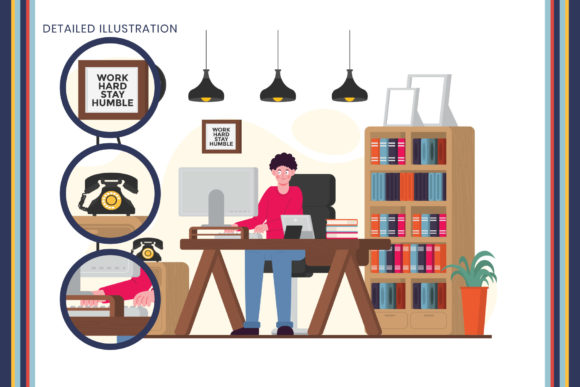
Modern Retro Office Scene Illustration C: A Designer's Review
I have spent years reviewing machine embroidery design files, testing everything from simple monograms to complex pictorial scenes. When I first laid eyes on Modern Retro Office Scene Illustration C, my initial reaction was one of genuine curiosity. It isn't just another generic icon; it feels like a snapshot of a specific time and place that has been reimagined for the digital age. As an experienced designer, I don't just look at the visual appeal; I immediately start thinking about how those lines will translate into thread, how the density will hold up on fabric, and whether this design will actually sell in a crowded marketplace.
The concept of a "modern retro" office is fascinating. It blends the nostalgia of mid-century aesthetics with the functionality of today's workspace. In terms of Graphics and Illustrations, this piece stands out because it captures a mood rather than just a single object. It suggests a story about creativity, productivity, and style. For anyone looking to create a handmade product that resonates with a specific demographic—like remote workers, creative entrepreneurs, or Etsy sellers targeting a vintage-loving audience—this file offers a unique angle.
Bringing the Design to Life: A Real-World Scenario
To truly understand the potential of Modern Retro Office Scene Illustration C, let me walk you through a scenario I recently considered for a client project. Imagine you are preparing a custom embroidered tote bag for a boutique coffee shop that specializes in artisanal goods. The owner wants something that reflects their brand's commitment to both modern efficiency and classic charm. They need a design that works well on canvas but also looks sophisticated enough to be worn as a fashion statement.
This is where Modern Retro Office Scene Illustration C shines. The composition is balanced, featuring mixed modern and retro objects that create a cohesive scene without feeling cluttered. If stitched onto a sturdy canvas tote, the design could serve as a centerpiece that draws attention. However, the success of this embroidery project depends entirely on execution. The intricate details of the office scene require careful planning regarding hoop size and fabric choice. You wouldn't want to rush this on a flimsy material, or the fine lines of the retro furniture might get lost in the stitching.
Similarly, consider using this design for a sweatshirt embroidery project aimed at a startup team. A group of developers or designers wearing shirts featuring this scene would feel a sense of camaraderie and shared identity. The design acts as a badge of honor, signaling that they value both tradition and innovation. But before you commit to a bulk order, you must test the stitch density. Dense fill stitches can sometimes cause puckering on heavier fabrics if the stabilizer isn't chosen correctly.
Technical Performance and Stitch Clarity
When evaluating any embroidery file, the devil is always in the details. Modern Retro Office Scene Illustration C appears to utilize a mix of satin stitch for outlines and fill stitch for larger areas. This combination is crucial for maintaining the definition of the retro objects. Satin stitch provides that crisp, clean edge that defines the shape of a desk lamp or a computer monitor, while fill stitch adds depth and texture to the background elements.
However, not all fabrics play nice with every design. If you plan to use this on a textured fabric like a heavy wool or a loose-weave linen, you might encounter challenges. The needle could struggle to penetrate thick fibers cleanly, leading to skipped stitches or distorted shapes. Thin fabrics present a different set of risks; without proper backing, the tension of the threads could pull the material out of alignment. For stretchy fabrics like jersey knits, which are popular for baby embroidery or casual t-shirts, you absolutely must use a high-quality cut-away stabilizer to prevent the design from warping during wear and washing.
Detailed corners and tiny lettering are often the weak points in complex illustrations. While Modern Retro Office Scene Illustration C seems robust, you should inspect the smaller elements closely. If there are minute details intended to represent small office supplies or decor items, ensure they are large enough to be distinct after stitching. On a small hoop size, these details might merge into a solid blob of color, losing the narrative quality of the scene. Always check your thread colors against the fabric background. High contrast is essential for readability, especially on dark fabric where light-colored threads might get swallowed by the weave.
Where to Use (and Where to Be Careful)
This design is versatile, making it suitable for a wide range of applications. It fits naturally on aprons for kitchen-themed businesses, pillow covers for home decor shops, and even as a decorative accent on holiday gifts. The nostalgic vibe makes it perfect for holiday embroidery projects, perhaps as a unique ornament or a festive wall hanging. For Etsy sellers and small shop products, this image offers a strong visual hook that can elevate a standard listing.
However, caution is required when applying this to curved surfaces like caps or hats. The perspective of an office scene is typically flat, and forcing it onto a rounded brim can distort the geometry of the buildings or furniture. Similarly, for products that need frequent washing, such as tea towels or work uniforms, ensure the design is durable. Dense stitch areas can trap lint or water if not finished properly, so a good wash test is mandatory before mass production.
If you are creating an embroidered patch, the outline needs to be particularly strong to withstand the fraying that occurs around patch edges. The detailed nature of this illustration means the border must be clean and precise. For commercial embroidery projects, clarity is key. Customers need to see the artistry instantly, and a blurry or poorly registered design can damage your reputation.
Practical Advice for the Embroidery Designer
Before you click "start" on your machine, there are several steps you must take to ensure the success of your finished product. First and foremost, test the design on scrap fabric. Do not assume that because it looks good on screen, it will stitch perfectly. Watch how the needle moves through the material and observe the thread tension. Check the stabilizer type; a tear-away might work for a lightweight tote, but a cut-away is likely necessary for a structured cap or a heavy-duty apron.
Review the stitch density settings. If the file is too dense, it will become stiff and uncomfortable to wear. If it is too sparse, the design may lack impact. Confirm the hoop size matches your intended garment. Trying to fit a large scene into a small hoop requires digitizing adjustments that might alter the original artistic intent. Inspect small details under a magnifying glass or zoomed-in view to ensure no critical elements are missing or broken.
It is also wise to test the design in black and white mockups. This helps you visualize the contrast and value structure of the image without the distraction of color. Compare how it looks on both light and dark fabric backgrounds. Does the text remain legible? Do the shadows pop? Finally, confirm licensing terms before selling finished items or distributing digital embroidery files. Some designs are for personal use only, while others allow for commercial resale. Understanding these terms protects your craft business and ensures you are operating ethically.
In conclusion, Modern Retro Office Scene Illustration C is a compelling asset for designers who want to add character and storytelling to their work. It bridges the gap between aesthetic nostalgia and practical application. By paying attention to fabric selection, stabilizer usage, and stitch density, you can transform this digital illustration into a tangible, high-value item that customers will love. Whether you are making a personalized gift or building a brand identity for a new boutique, this design offers a solid foundation for creative expression.